The story
The valley that held the blue
For some seven thousand years, one valley has supplied the world’s blue. The lapis workings of Sar-e-Sang, high above the Kokcha river in Afghan Badakhshan, are among the oldest mined deposits on Earth. Stone from these mountains travelled the whole ancient world: to the Royal Tombs of Ur in Mesopotamia, and to Egypt, where it was inlaid into the funerary mask of Tutankhamun.
Renaissance Europe ground the same stone into natural ultramarine, the blue “from beyond the sea”: a pigment that at times traded above the price of gold. Michelangelo left the Virgin’s robe in his Entombment as bare panel, quite possibly waiting on it; Vermeer used it with a freedom his contemporaries could not afford.
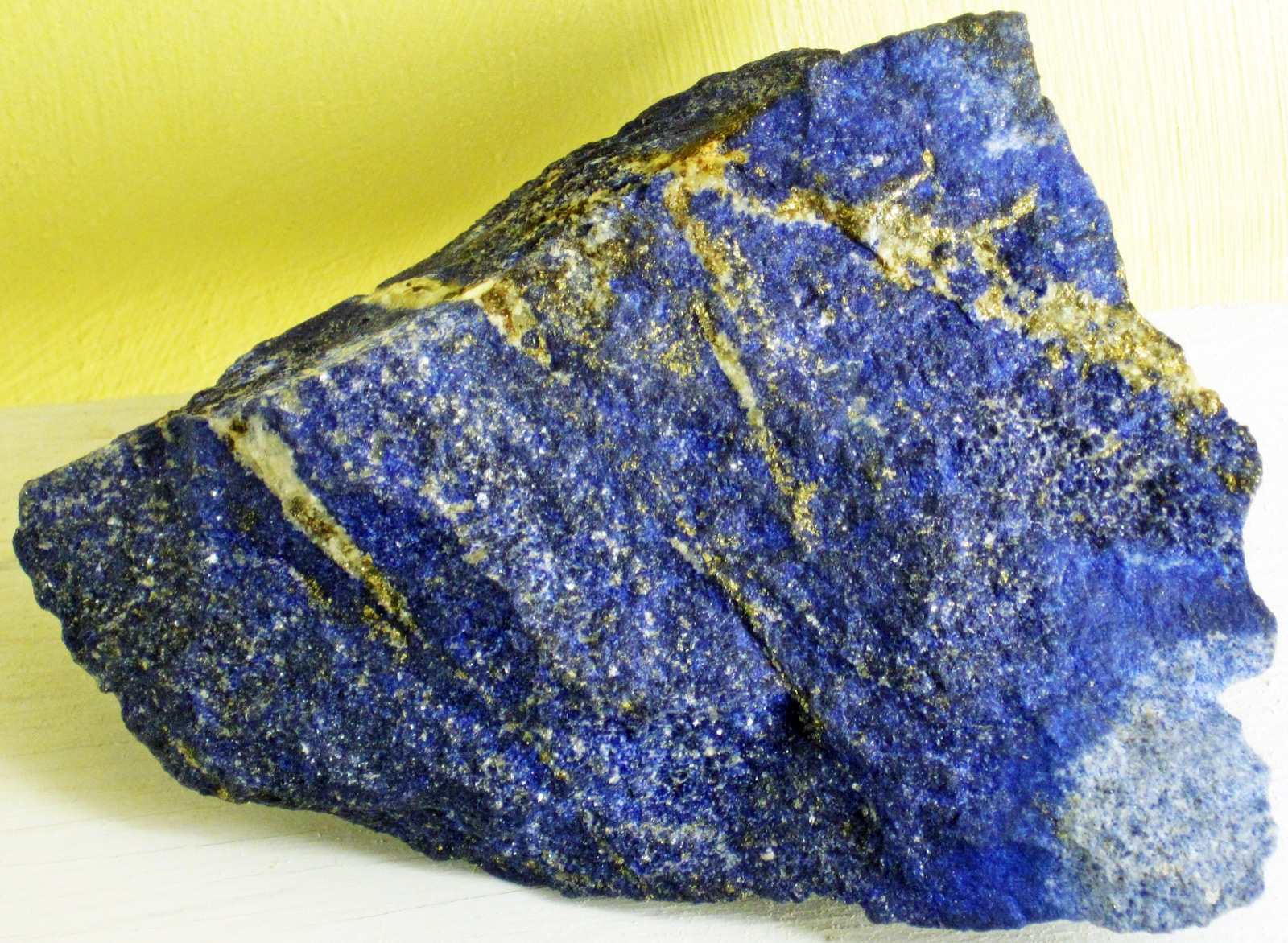
The stone itself is not one mineral but a meeting of three: deep lazurite blue, veins of white calcite, and flecks of brassy pyrite scattered like gold dust across a night sky. A HAS dial is a thin section of that geology, the same blue that outlasted every empire that prized it.
In watchmakingLapis dials appeared on vintage Rolex Day-Date and Datejust models of the 1970s and 80s, a family of hardstone dials that today commands multiples of standard examples at auction, and Piaget made lapis a house signature on its gold dress watches of the 1960s and 70s.