The story
The room that was never solid
In 1837, fire gutted the Winter Palace in St Petersburg. When the architect Alexander Briullov rebuilt the Empress’s reception room, he dressed it in malachite, columns, pilasters, fireplaces, all in banded green stone drawn from the Demidov family’s copper mines in the Urals. The finished room, completed in 1839, gives an impression of impossible mass. It is an illusion.
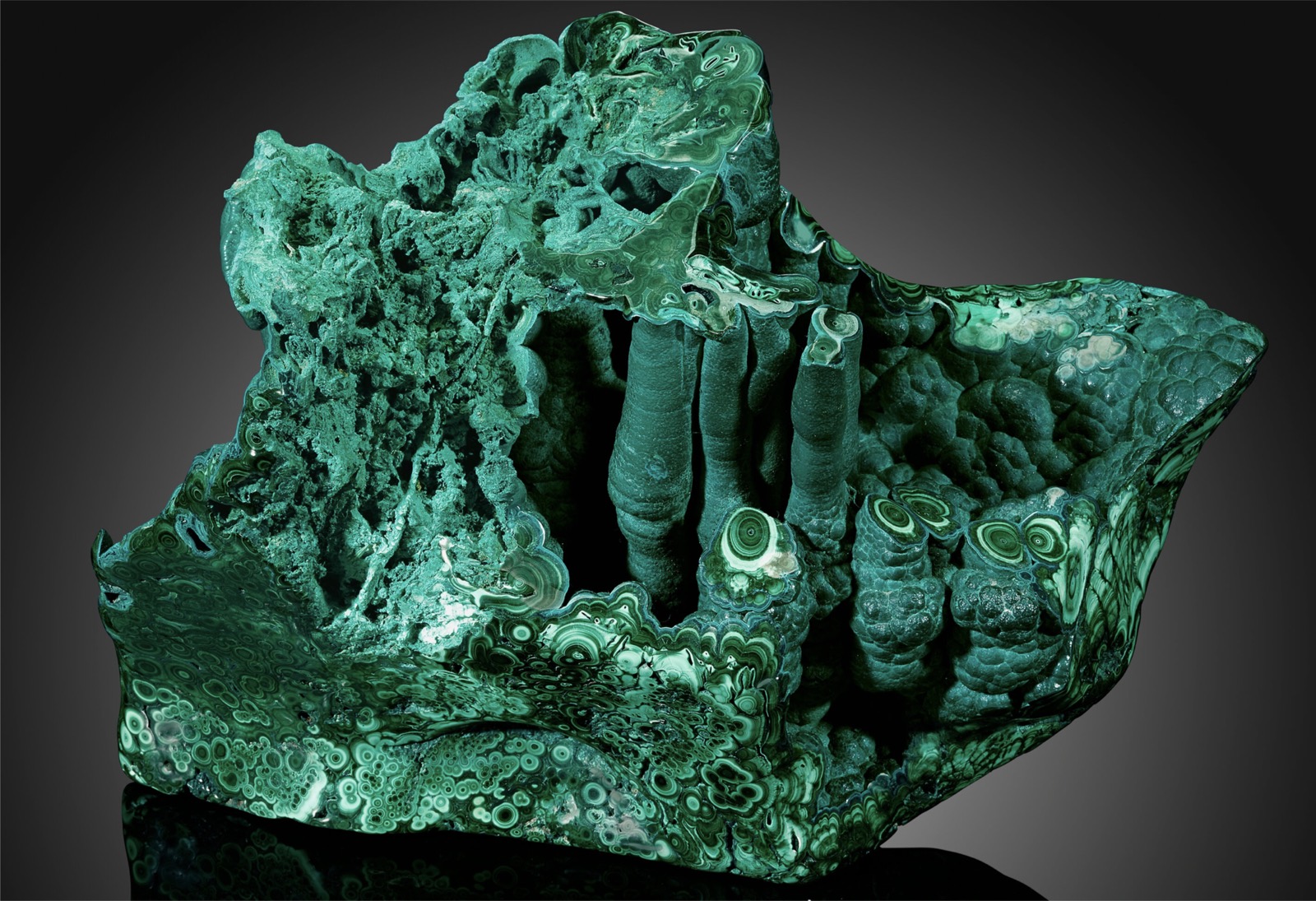
Malachite almost never occurs in flawless blocks, so Russian lapidaries perfected what came to be called Russian mosaic: the stone sliced into veneers a few millimetres thin, each piece matched band to band, the seams filled with malachite-tinted mastic and polished until the eye reads one continuous stone. The room went on to hold history of its own weight, the Provisional Government met beneath its columns in 1917, and its ministers were arrested next door when the palace was stormed.
A malachite dial is the same discipline carried further: a single slice, cut thinner than those veneers, its banding chosen and centred the way those craftsmen matched theirs. HAS cuts ten.
In watchmakingPiaget’s first hardstone-dial series of 1963 used roughly one-millimetre cuts of lapis, opal, tiger’s eye and malachite on ultra-thin gold watches. Rolex fitted malachite chiefly to the Day-Date from the late 1970s into the 1990s, on some examples omitting hour markers entirely, so the banding runs uninterrupted.